
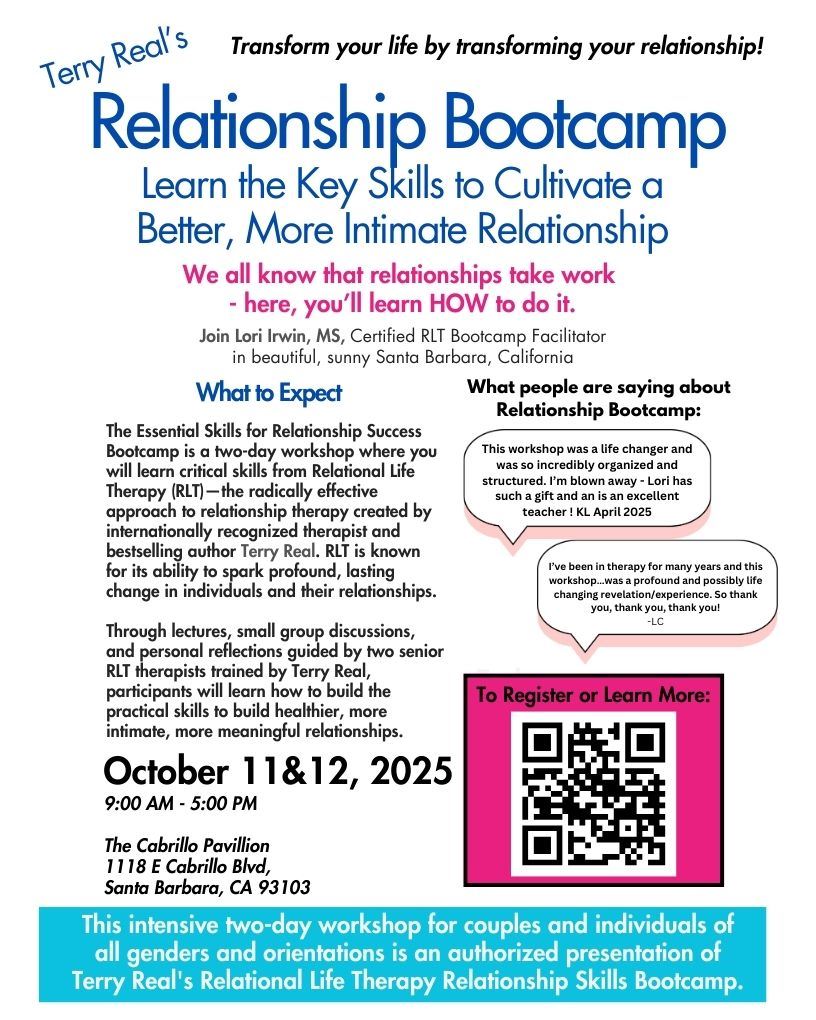
If you’ve been following my practice, you probably know that I’m not currently offering relationship or couples counseling to new clients. However, in an effort to support my Long Beach community, I’m building a list of therapists who do work with queer and polyamorous relationships in the Long Beach area. There are lots of options when it comes to relationship support in Southern California, and one of the options I recommend is working with a couples coach virtually. Coming up in October, there is a Relationship Bootcamp that ya’ll might want to check out!
More and more of my adult clients are reaching out to me, claiming “I think I have ADHD, ADD” or “I’m pretty sure I’m neurodivergent.” With access to 24/7 information in our pockets, more and more adults are doing extensive research on their symptoms and diagnosing themselves. From a therapist’s perspective, this is happening at such a rapid rate that it’s hard for me to keep up. Discussing this phenomenon with a lot of my colleagues, I’m hearing mixed opinions.
“You’re a therapist, just diagnosis them with ADHD or ASD (Autism Spectrum Disorder)!”
“Neurodivergent is way for mentally ill adults to get a pass!”
“Why would an adult need an ADHD or ASD diagnosis? They’re not in school! They’re adults!”
While all of these conversations are swirling, I’ve become aware of my own ADHD and ASD symptoms. I’m questioning my parents neurodiversity and how many of their eccentric (and abusive) parenting strategies were actually symptoms that had gone on unaddressed, undiagnosed, and untreated. I am also asking myself the popular question “Am I neurodivergent?”
What is neurodivergent?
Let’s start answering this question with some other questions: What is neurodivergent? Why should I consider getting evaluated? How does one go about doing this? How will this change therapy for me? A Google search definition of neurodivergent is defined as: “differing in mental or neurological function from what is considered typical or normal (frequently used with reference to autistic spectrum disorders); not neurotypical.”Neurodivergence is a term originally attributed to the 1990s sociologist Judy Singer. It is a non-medical umbrella description of people with variation in their mental functions. Neurodiverse conditions include autism, dyspraxia, dyslexia, dyscalculia and ADHD, among others. (https://www.weforum.org/agenda/2022/10/explainer-neurodivergence-mental-health/)
The “others” that they speak of above, could also include PTSD (Post traumatic Stress Disorder) and other mental health disorders. If you’ve ever experienced trauma and PTSD symptoms, you will recognize that your brain works differently than many folks around you.

Many of my clients started labeling themselves as neurodivergent, or came to me identifying as neurodivergent for a few reasons:
Community (wanting to feel less alone and “othered”)
Validation (“is what I’m experiencing real?”)
Structure and direction (“what can I do about these symptoms that I’ve had for a long time?”)
If you think that you’re neurodiverse, and much of the research and communities created are fitting for you, you are absolutely neurodiverse! Congratulations? These are the reasons many people seek out answers about themselves and you are not alone! So why go any further and seek out a formal diagnosis?
Why should I get diagnosed?
There are probably as many answers to this question as there are people asking them, but with myself and my clients, here are some valid reasons to seek out a formal diagnosis from a psychiatrist or neuropsychologist (MD), or psychologist (PhD) (and here is a lovely video on the subject: https://adult-autism.health.harvard.edu/resources/getting-an-autism-diagnosis-as-an-adult/)
Medications/therapy/behavioral changes are not working for you in the same way they work for others
The need for disability support and services that would make your life easier
You need accommodations at work/school/groups that would allow you to be more effective
You want compassion for yourself, and validation that “I’m not just lazy/rigid/crazy/unloveable”
How do I go about getting formally evaluated?
When seeking a formal evaluation, there are a wide range of tools and systems that professionals will use to diagnosis you. The cost ranges wildly from hundreds ($200) to thousands of dollars ($6k) and the time it takes for these evaluations to be completed also range wildly. My advice to you, from one neurodiverse person to another, is to trust your gut. Do you like working with this person? Do they have the credentials necessary? Can you afford this evaluation? According to many of my clients, receiving a formal ADHD diagnoses is way more accessible than receiving an ASD diagnosis. For more information on seeking an ASD diagnosis as an adult, check out the Association for Autism and Neurodiversity’s website: https://aane.org/autism-info-faqs/autism-basics/diagnosis/
And now the million dollar question: How will this change therapy for me?
If you’re a client of mine right now, the short answer is: It won’t change a damn thing. As a queer sensitive, neurodiverse, and client-centered therapist, we will identify you as whatever pronouns, name and diagnoses that resonate for you. If you’ve experienced past trauma, we will consider EMDR as a mode of treatment and we will move at the pace that feels safe for you. If you have social anxiety, alcoholism or addiction (perhaps due to self-medicating your neurodiverse symptoms), we’ll collaborate on strategies to meet your goals. But receiving a formal diagnoses does help me better advocate for you when it comes to working with other systems (job, doctor, psychiatrist, family). A diagnosis might also give you a language to talk about yourself in a different way, and find compassion for yourself. Part of my journey of having more compassion for myself and to better work with my clients is to seek out more information, and possibly move on to get a PhD so that I can provide a thorough evaluation to clients who are seeking answers. This is a pop-culture phenomenon that is not going away and has opened up all kinds of questions.
Starting next week, I’ll be resuming a support/discussion group for queer, Ethically Non-Monogamous folks at the LGBTQ Center of Long Beach. Send me an email at LBCTherapy@Gmail.com to sign up for this FREE group!

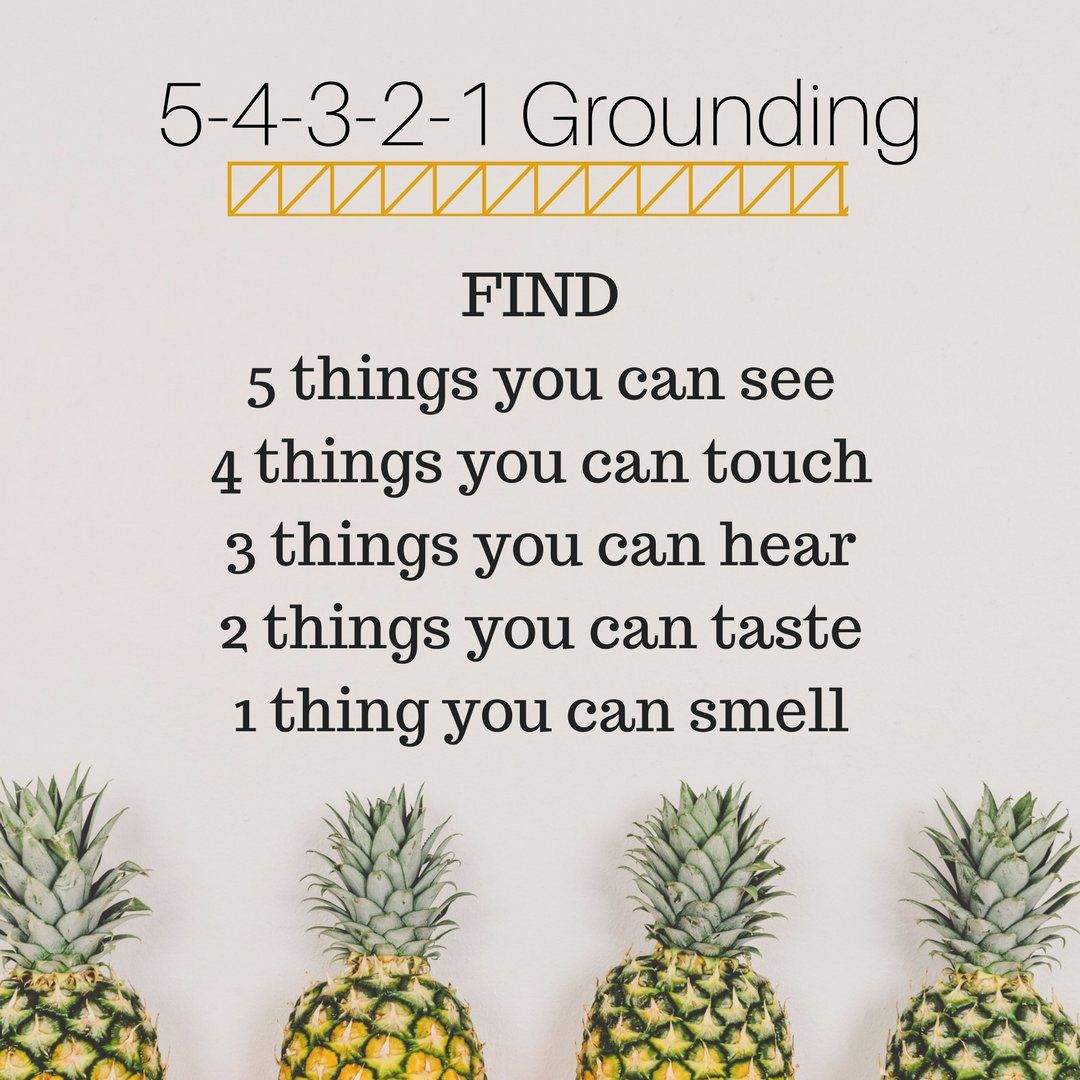
There are more mindfulness apps and grounding techniques than I can possibly count. With technology being what it is, healers from around the world are sharing their techniques with us in the comfort of our own homes. So which mindfulness technique or grounding exercise is right for you? This is a big question that requires research, discussion and practice. However, this simply grounding exercise can be helpful in returning you to the present moment. When intense anxiety sets in, a panic attack comes on or reminders of past trauma are present, slowing down the breath is important. It can be helpful to slow down the breath and stay connected to the senses using the above technique. If you are with another person, you can describe your sensory experience to another person. And if you’re alone you can do this solo. If a person you know and love is experiencing intense anxiety, it might be helpful to create a plan with them where you ask them about their sensory experience. Ask them to describe what they see, hear, touch, smell and taste. This is one of the many tools that you can add to your emergency mental health tool kit. Let me know how it goes!
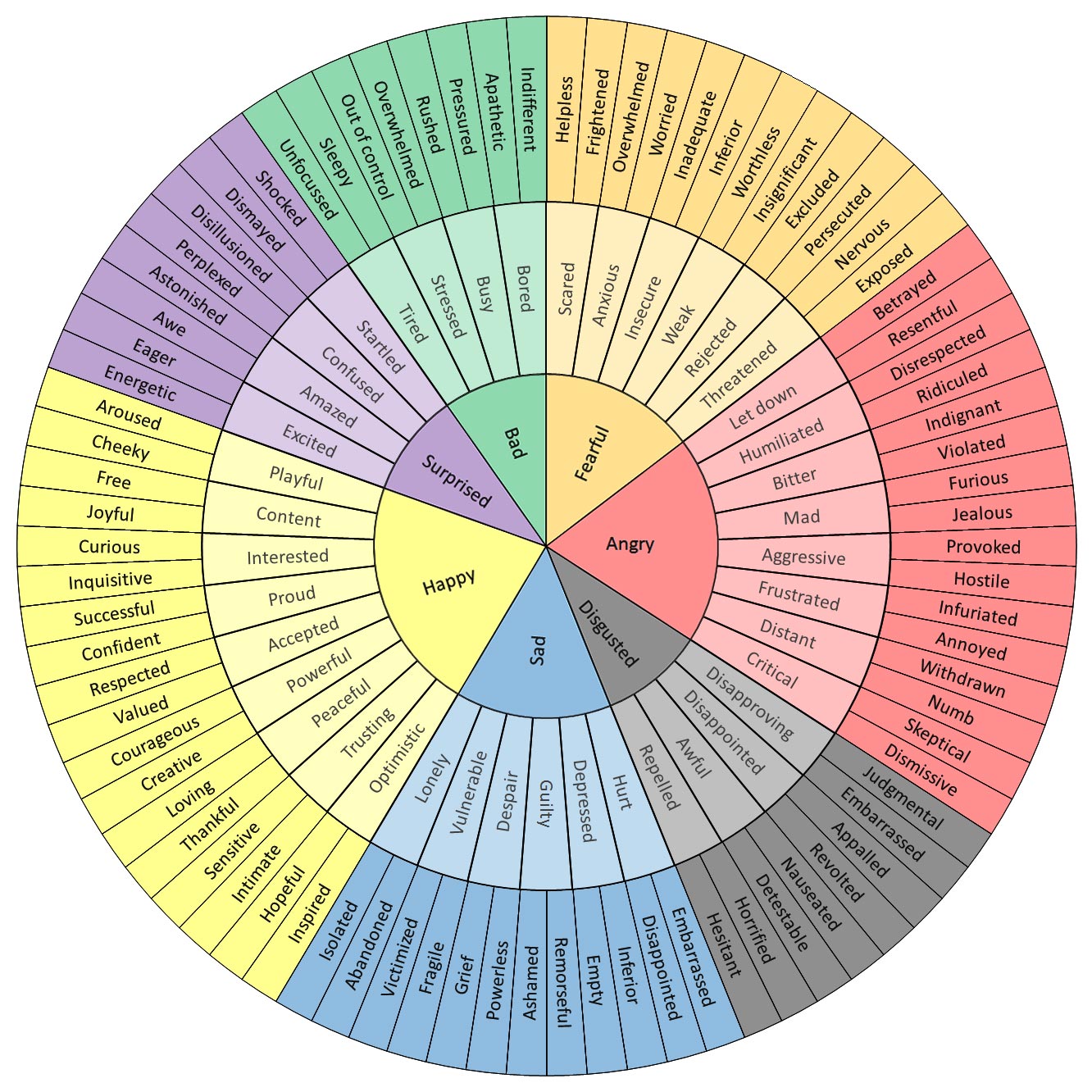
All feelings are valid and a lot of my clients are in the process of learning about their feelings. In fact, this is something that we’re all learning to do as adults, and it is pretty common to be “speechless” when it comes expressing ourselves. I like to share this feeling wheel with them to give them additional word choices on how they might be feeling. Checking in with self daily to see how you’re feeling is an important skill to develop. Then, deciding on HOW you’d like to express that feeling is the next step. How are you feeling today? How can you express that with words or actions?
Recently, I opened up space to receive more private practice clients virtually and in my Long Beach office. For those who are looking for anger management or anxiety reduction with an LGBTQIA+ sensitive perspective, you’ve come to the right place! I use the tools of reflective communication, CBT (Cognitive Behavioral Therapy), SFBT (Solution Focused Brief Therapy), and EMDR (Eye Movement Desensitization and Reprocessing). Please feel free to email me if you have any questions about the work I do and to set up a free 20 minute consult: LBCTherapy@gmail.com

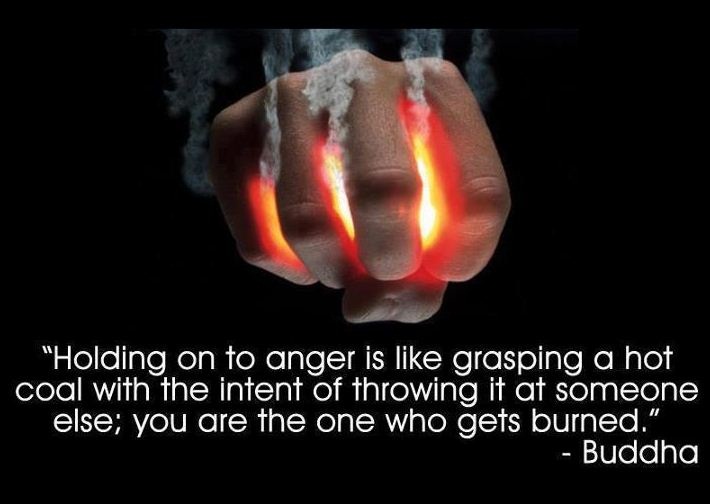
So here we are! Maybe some of us have found solace and unity since November 8th but I know many who are angrier than ever. They’re angry and they aren’t really sure how to channel that powerful energy (like I talked about in my previous post). And the Facebook posts and Tweets that push people to heal and move past the anger are not helping.
However, those of us that are angry can’t fight fire with fire! When we call people names or attack them verbally, we become the bullies and we become that which we hate most. So what do we do with all this pent up hostility?

If you feel like you’re shouting into the void, you’re not alone. So stop shouting and trying to change people’s minds! No matter how pretty your words are, no matter how loud you talk or what language you use, you’re not getting through! We are speaking different languages right now.
In the first book of the Elements series,”Where Water Meets Rock,” Water comes head on to Rock in anger. They are two very different entities but they would not be true to themselves if they constantly clashed. They would destroy each other. The power of the water is in it’s persistence and the power of the rock is in it’s strength to stand. And (spoiler alert), they are eventually able to work together when both are able to sit and be with each other. But if they were never true to themselves and came up against each other, they would never have developed a relationship.
If your message is love, to stand up for the down trodden, to change the world, then DO THAT! What does it mean to do the work of LOVE? Love is universal but for each person it is different. Here are some ideas: get involved in an anti-bullying program, start meditating and praying for those that are sick/starving, volunteer in your community, foster a homeless pet, change jobs to do something you are more passionate about, march in the streets at a peaceful protest, get more involved in local politics, take a self-defense class, donate your time or money to a cause that is meaningful to you or travel to be of service to others. There are so many programs that are desperate for people to help! Check out your local Chamber of Commerce website to see what programs are in your community.
I will be getting more involved with my time exchange program locally called Long Beach Time Exchange. I will be providing volunteer work for other’s volunteer work. This will allow me to educate the community about the many volunteer opportunities, to get more involved in urban gardening and participate in a true bartering program that goes above and beyond a cash economy.
This can be a revolution and surge of love! It starts with you!
Mainstream anything tells us that anger is wrong and that we must get rid of it anyway we can. To rid yourself of anger would be to deny your true nature, and therefore an unnatural state. We are emotional beings and anger is a powerful emotion!!
Anger gets a bad reputation because of how people have learned to express it. Violence, destruction, lack of compassion and pain is abusing a power that we can all harness. We all have the ability to become angry and this is a wonderful thing!
It’s not the emotion of anger that is destructive. The emotion is raw energy that has been used in the past to make changes. How many people have changed this world (for the better) by getting angry and doing something about it? If you want a big change in your life, get angry! After getting angry, make a decision and follow through. Develop a plan to make a difference. Be calculated and strategic about how you use this power. Holding on to anger and doing nothing will scar you for life!
I’m not going to lie. I’m so angry for so many reasons regarding the changes set in motion in my country. Sure, I like to dismiss this election as something that someone else has done. Maybe because I live in California, I am not responsible for this in some way, shape or form?
What can I do about this? Should I make threats of moving to Canada, spout words of destruction from Twitter, rise up and protest, or get together with my girlfriends and talk shit about how much I hate this country? I don’t think any of those things would be effective at soothing my soul or quenching my anger.
I am vowing to be more involved and active in local politics. I am vowing to show people kindness and compassion when I think they don’t deserve it. I will unite with those that want to heal this country from it’s origins of racism, sexism, homophobia and ignorance. I will become an even better version of myself. I will go inward, not outward.
Growth. When you think of a growing human, you might think of a baby or young child. The changes that occur are visible and over a relatively short period of time. And it’s true…babies brains and bodies grow at an incredibly rapid rate. With adults, it can be almost as drastic, but less visible. For example, this year I have been solidifying a lot of healthy habits that feel good and natural. My routines have decreased my anxiety tremendously, allowed me to be more effective with my time, given me clarity and focus, and overall much more happiness. This is a drastic difference from the past, where I felt that time was pulling me around by a leash and I had zero control. I feel like a new person!
Instead of wallowing in your doubt, self-pity, insecurity and brain fog, think about how you have grown over the last year. What is different? What do you like better? What would you like to continue to grow and change? Growth happens whether we want it to or not. By setting goals and following through on healthy daily routines, you can take back control of this marvelous experience. Growth is happening right now…feel it and live it!!
There will be numerous times when life feels like you’re going against the grain or your luck has run out. The road starts to get narrow and you look down to see the steep cliffs on either side of you. People might tell you, “just get through it” and they’re right! But how do you get through it? 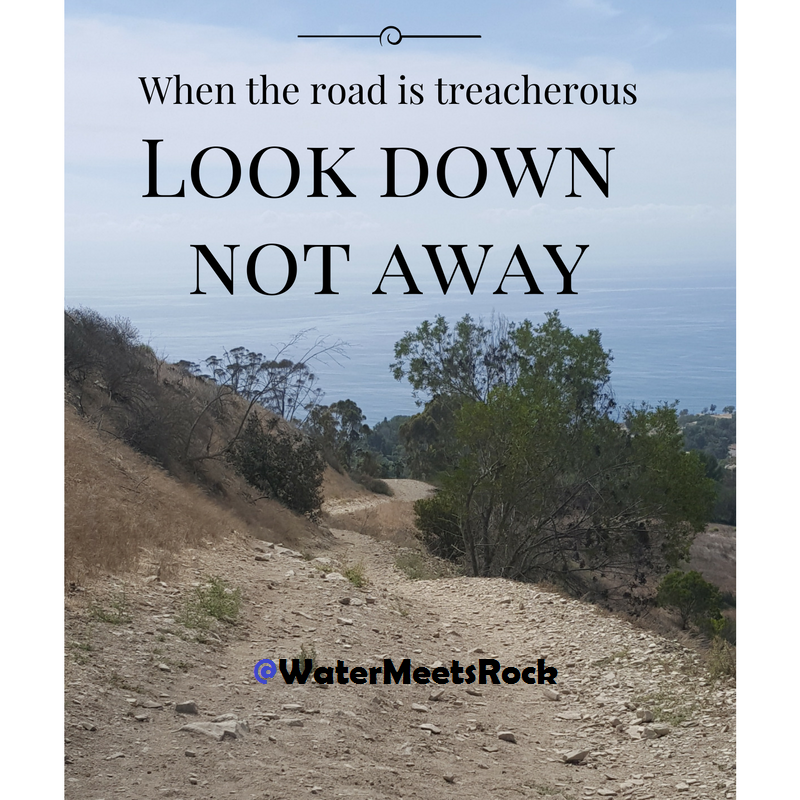
When the road is treacherous, looking back at the path you just traveled is about as helpful as looking forward at the path before you. Looking back and forward does not move you faster through the challenging path. You still need to take one foot in front of the other and keep moving! If you get tired, it is good to rest, but know that each little step you take will be one step closer to getting through it. When it is hard to move down that path, move slower. Be more deliberate with each step. Feel the ground beneath your feet, be conscious of each rock, feel the pain and resistance. What does this look like for you today?
I am experiencing a treacherous path right now. I forget to be conscious of each step and I lose time, I lose space and I lose myself. Even when there are setbacks, I have to remember to keep my healthy practices, to feel my body in yoga, to meditate, to cook, to write to play guitar, to hike and to be open to the possibilities. I forget the treacherous parts are opportunities for me to become more skilled, stronger, more flexible and ultimately more present. And I know it’s just a few more steps to go.
 Chai Benson, MS, MFT